/
8 mins read
TL;DR
Product operations managers evaluating onboarding tools face an impossible puzzle. There’s too many overlapping platforms, no clear ROI when you can’t connect tour completion to activation, and no single dashboard linking guidance to outcomes. This guide compares 13 product onboarding tools for SaaS in 2026, evaluated against five criteria that matter after implementation: complete tool consolidation versus partial replacement, no-code event tracking without engineering tickets, behavioral targeting depth for activation paths, and total cost of ownership including hidden implementation fees.
Product ops managers evaluating product onboarding tools in 2026 aren’t starting from zero. You already have a stack. You know where it breaks. Maybe the analytics can’t trigger action, overlapping tools don’t share data, or onboarding flows ship but don’t clearly move activation.
You’re not looking for a refresher on what onboarding software does. You’re looking for a platform that closes specific gaps in your current stack without adding another dashboard, vendor, or integration to manage. When onboarding data lives in one tool and retention data lives in another, activation becomes a vanity metric. Consolidation allows you to finally see whether onboarding impacts revenue.
The sections below are structured to help you evaluate the 13 best product onboarding tools against those operational realities, so you can assess consolidation, measurability, and activation impact.
What are product onboarding tools?
A product onboarding tool is an AI-powered digital adoption platform (DAP) that helps B2B SaaS teams guide users through product workflows, collect feedback, and measure activation without engineering dependencies. These platforms let product, growth, and customer success teams build in-app tours, tooltips, checklists, surveys, and help centers using no-code editors, then deploy them directly inside your application.
Unlike customer onboarding platforms, learning management systems, or email automation tools, product onboarding tools deliver contextual guidance at the exact moment users encounter features. They drive adoption through in-product experiences rather than external documentation or scheduled training.
How to choose a product onboarding tool
If you’re reading this, you’ve already done the first pass. You’ve compared feature lists, watched demos, and narrowed your shortlist. What most product ops teams only discover after a painful platform switch is that the deciding factors aren’t on the comparison charts. Here are the four questions that separate platforms that close the adoption-to-revenue loop from those that create more tool sprawl.
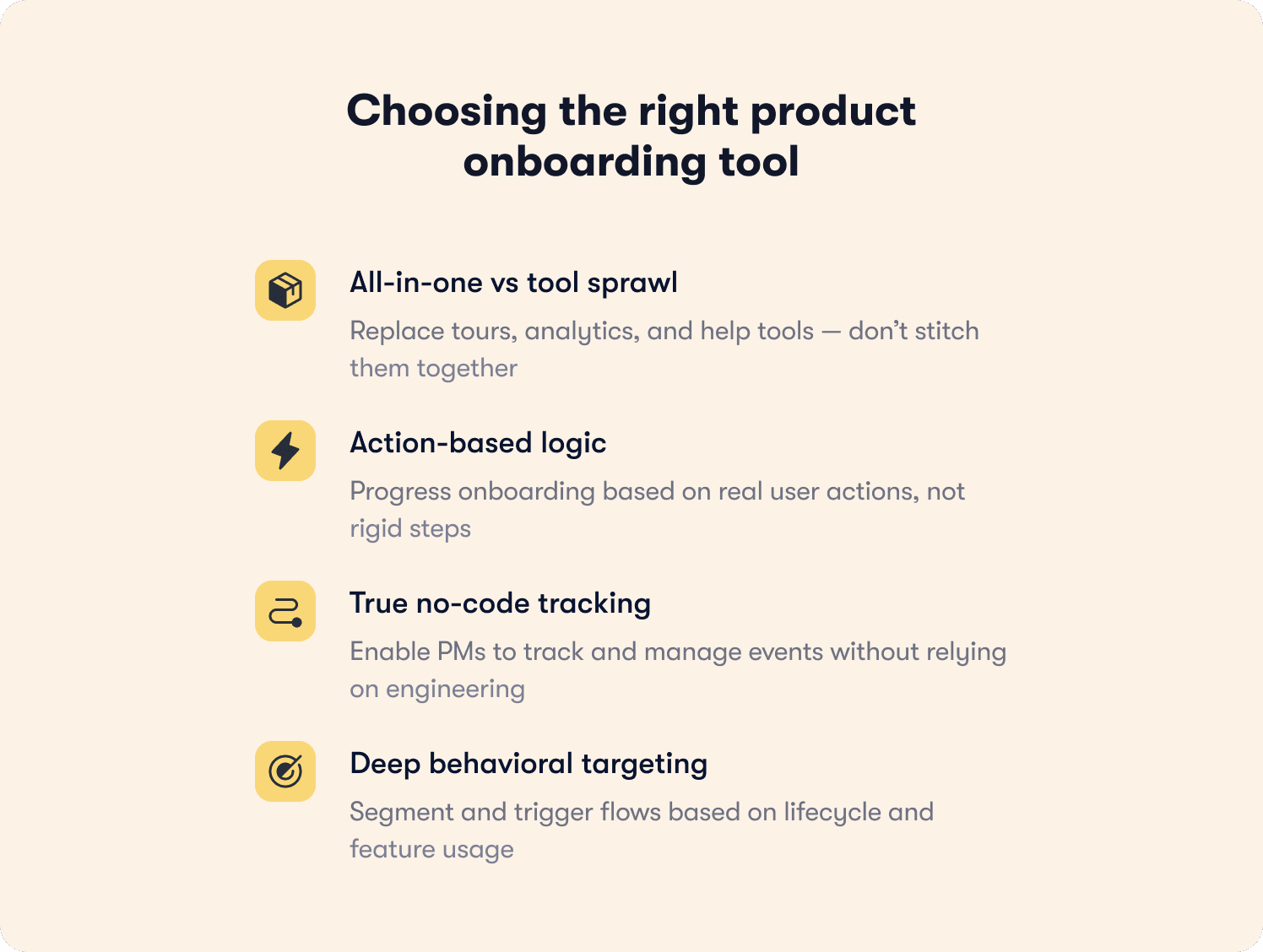
1. Does it consolidate tours + analytics + help or require stitching tools together?
The right onboarding tool should replace multiple subscriptions, not add another integration point. If you’re still toggling between separate tools for tours, surveys, analytics, help centers, and AI flow integrations, you haven’t eliminated tool sprawl. You’ve just rearranged it.
2. Action-based vs linear tour logic?
Linear tours force users through predetermined paths regardless of what they actually do. Action-based tours progress when users complete real tasks, adapting to behavior rather than dictating it. The difference shows up in completion rates and user frustration.
3. No-code event tracking for product managers?
If your PMs need to file engineering tickets every time they want to track a new user action or segment by behavior, your “no-code” platform isn’t actually no-code. True autonomy means clicking an element to track it, not writing JavaScript or waiting on developer queues.
4. Behavioral targeting depth for activation paths?
Can you segment by lifecycle stage, key feature usage, user properties, and trigger tours based on specific actions? Or are you limited to basic attributes like signup date and plan tier? Shallow targeting means generic onboarding that fails to drive activation.
Which core tools does each product onboarding platform replace?
Most “best user onboarding software” comparisons focus on UI patterns and templates. But that misses a more practical question product teams care about: How many separate tools will I still need after I buy this?
Many onboarding stacks are stitched together from multiple systems:
A tour builder
A product analytics platform
An NPS tool
A help widget
And increasingly, an AI assistant layer
Each silo also breaks the feedback loop between behavior and business impact. When guidance, analytics, and lifecycle signals live in separate systems, teams can’t see which onboarding flows drive retention or which feature nudges lead to upgrades.
So instead of comparing feature checklists, we evaluated how much of the typical product adoption stack each platform can consolidate. If your primary goal is eliminating behavioral blind spots and simplifying your onboarding stack, consolidation matters just as much as feature depth.
Platform | Tours | Analytics | Surveys | Help center | AI | Total replaced |
|---|---|---|---|---|---|---|
Jimo | ✅ | ✅ | ✅ | ✅ | ✅ | 5 tools |
Pendo | ✅ | ✅ | ✅ | ✅ | ✅ | 5 tools |
Userpilot | ✅ | ✅ | ✅ | ✅ | ✅ | 5 tools |
WalkMe | ✅ | ✅ | ✅ | ✅ | ✅ | 5 tools |
Whatfix | ✅ | ✅ | ✅ | ✅ | ✅ | 5 tools |
Stonly | ✅ | ✅ | ✅ | ✅ | ✅ | 5 tools |
Gainsight PX | ✅ | ✅ | ✅ | ✅ | ✅ | 5 tools |
Appcues | ✅ | ⚠️ | ✅ | ✅ | ✅ | 4 tools |
Chameleon | ✅ | ⚠️ | ✅ | ✅ | ✅ | 4 tools |
Userflow | ✅ | ⚠️ | ✅ | ✅ | ✅ | 4 tools |
UserGuiding | ✅ | ⚠️ | ✅ | ✅ | ✅ | 4 tools |
Inline Manual | ✅ | ⚠️ | ✅ | ✅ | ✅ | 4 tools |
Product Fruits | ✅ | ⚠️ | ✅ | ✅ | ✅ | 4 tools |
✅ = can fully replace
⚠️ = can partially replace
13 best product onboarding tools for SaaS
Each review below breaks down exactly what tools each platform replaces, who it’s built for, and where it leaves gaps in your stack. Use the consolidation count in each first bullet to identify which best matches your team’s operational reality.
1. Jimo — Best for product teams eliminating tool sprawl with an all-in-one platform
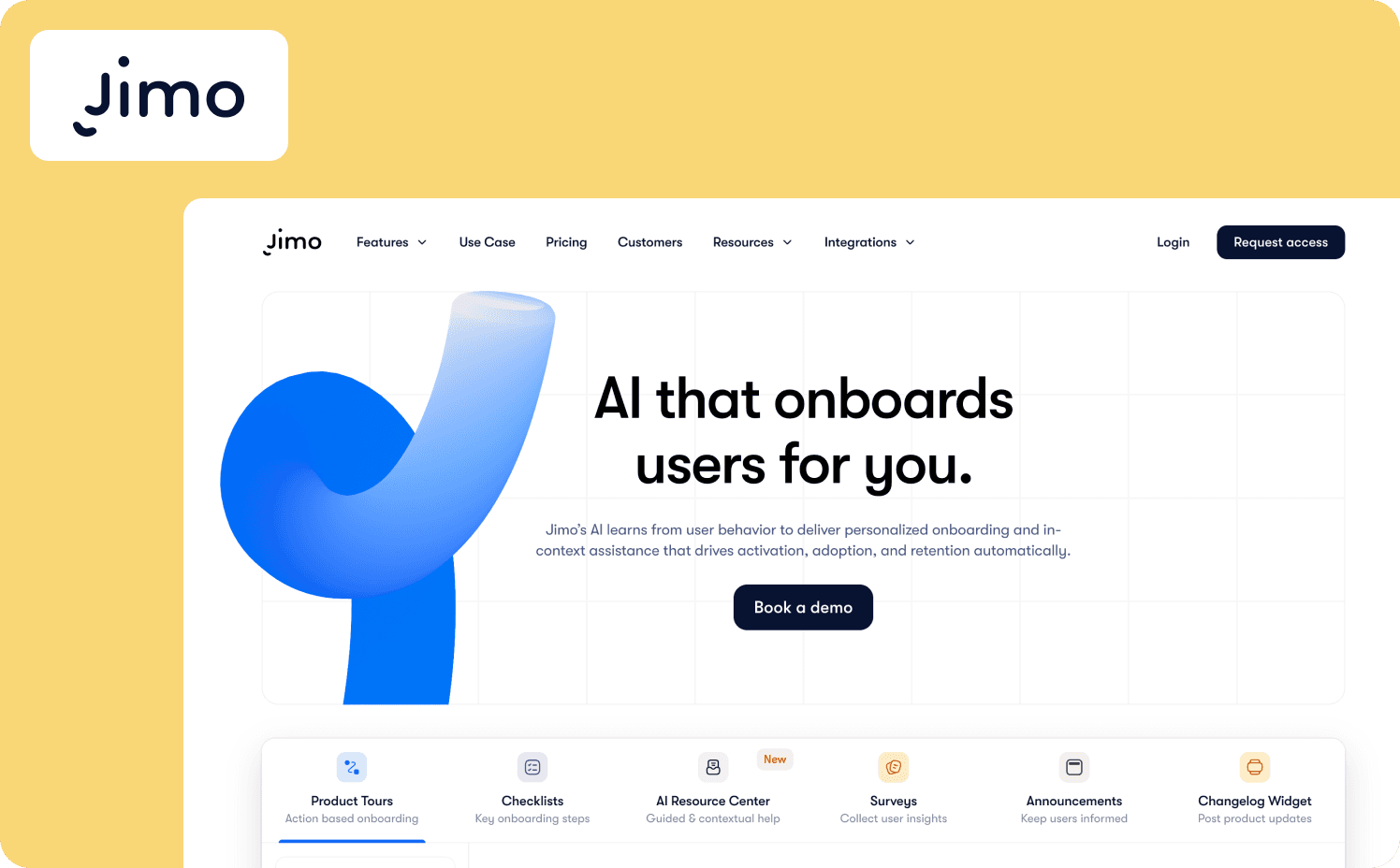
Jimo is an AI-powered digital adoption platform that consolidates product tours, in-app analytics, user surveys, help resources, and AI flows into a single unified interface. Rather than managing separate subscriptions for onboarding, feedback collection, knowledge bases, and product announcements, Jimo positions itself as the all-in-one solution built for product-led growth teams. And unlike static DAPs, Jimo learns what works and improves automatically.
The platform targets B2B SaaS companies that want to consolidate their product adoption stack without sacrificing functionality, offering a low-code builder that lets product, growth, and customer success teams create personalized onboarding experiences in minutes without engineering dependencies.
Consolidates five core tools:
✅ Tour builder
✅ Analytics platform
✅ Survey tool
✅ Help center
✅ AI assistant
Strengths:
AI generates tours quickly: Record your user journey once and Jimo’s AI automatically builds the product tour structure with auto-progressing steps that don’t require “next” buttons.
Smooth deployment eliminates implementation delays: Integration and first experience launch in minutes using the Chrome extension, compared to weeks-long implementations for enterprise platforms.
No-code event tracking for product managers: Click any element to track user actions without writing JavaScript or filing engineering tickets, enabling product-led onboarding without developer bottlenecks.
Resource center with AI assistant cuts support volume: The built-in help hub auto-generates contextual answers using AI, letting users solve problems without leaving the app or creating support tickets.
Unified analytics dashboard surfaces cross-experience insights: Track tour completion, survey responses, resource center usage, and how users engage in one interface instead of stitching together data from multiple tools.
Limitations: If you need deep enterprise governance/compliance, highly complex workflows, or a fully custom integration-heavy DAP rollout, Jimo may not be the right fit. Jimo optimizes for speed, iteration, and behavior-driven adoption improvements.
Starter: $449/mo (2,500 monthly active users (MAUs))
Growth: $824/mo (2,500 MAUs)
Enterprise: Custom
2. Pendo — Best for enterprise teams needing deep analytics combined with onboarding
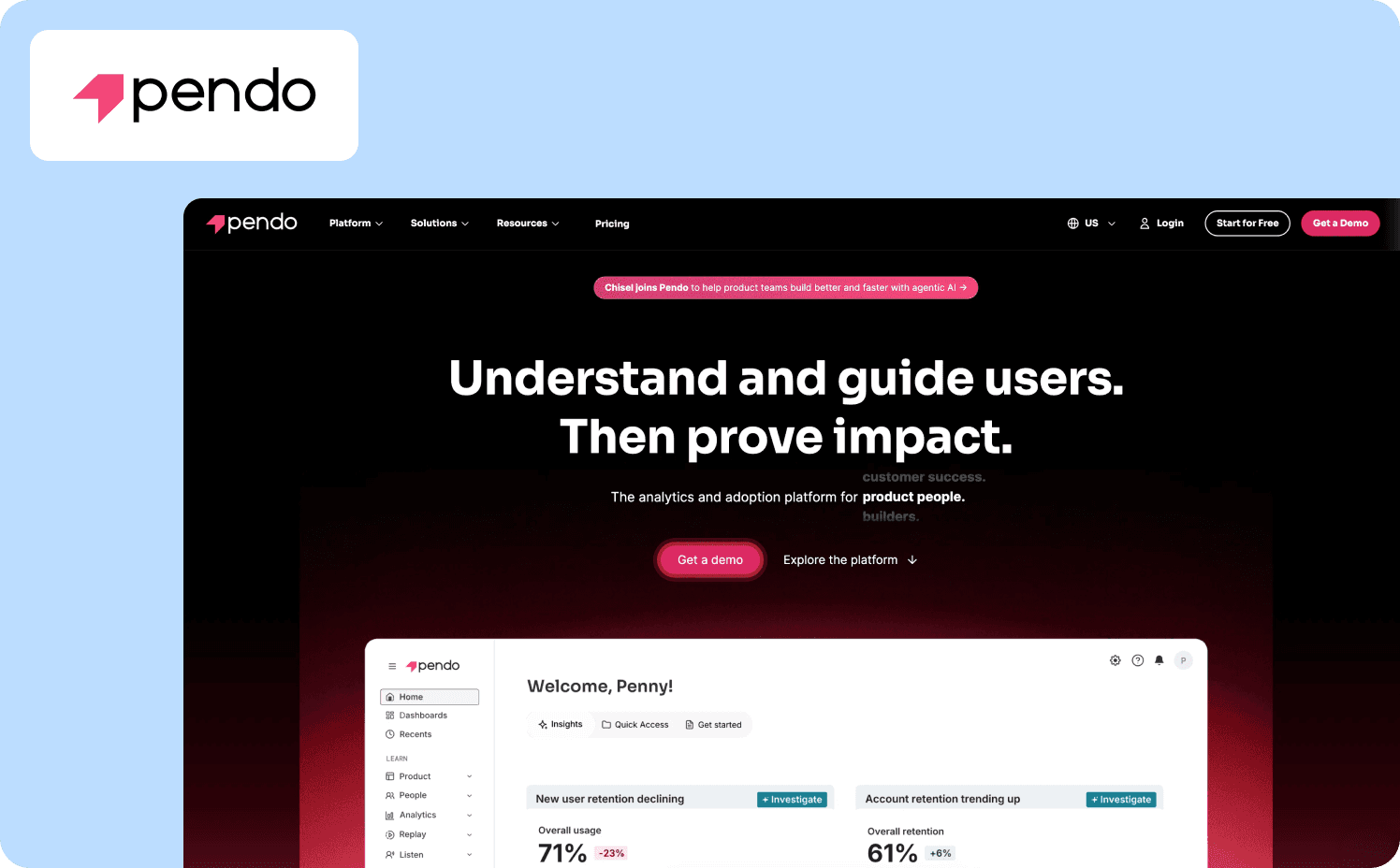
Pendo is an enterprise-grade product experience platform. Pendo targets large product teams managing complex user engagement across active users who need comprehensive product analytics combined with in-app guidance capabilities.
Consolidates five core tools:
✅ Tour builder
✅ Analytics platform
✅ Survey tool
✅ Help center
✅ AI assistant
Strengths:
Unified analytics-to-action workflow: The platform directly connects product analytics with in-app guides, enabling teams to identify friction points and deploy targeted interventions without switching tools.
AI-powered guide creation: Teams can auto-generate multi-step onboarding tours using natural language prompts while AI clusters and summarizes customer feedback themes.
Limitations: Pendo’s enterprise positioning creates significant barriers with high costs and a long implementation. Organizations still need separate tools for deep training and features locked behind expensive add-ons.
Pricing:
Free: For 500 MAU
Base: Custom
Core: Custom
Ultimate: Custom
3. Userpilot — Best for product-led growth teams combining onboarding with behavioral analytics
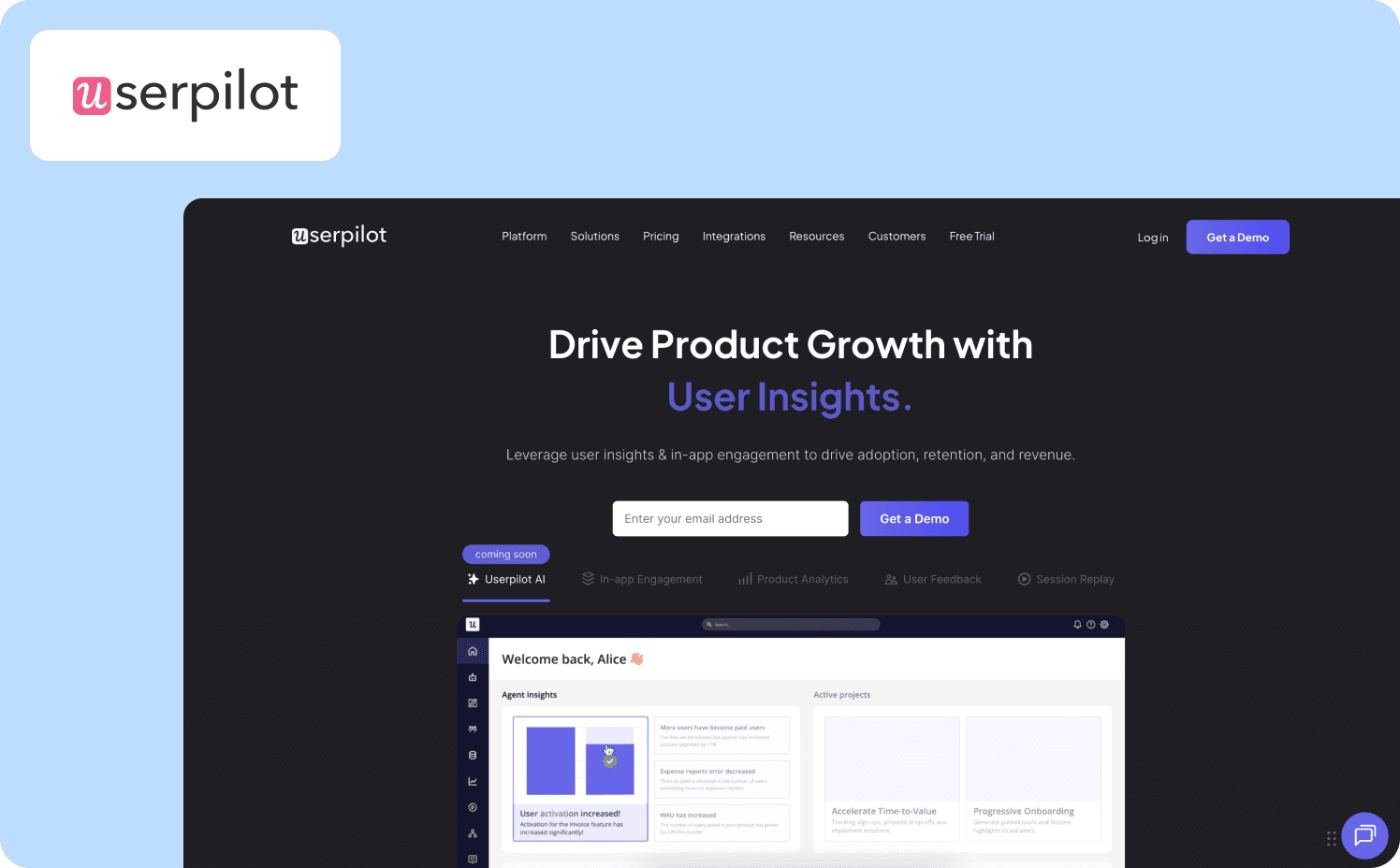
Userpilot is a no-code product growth platform that enables SaaS teams to design personalized in-app onboarding experiences, collect user feedback, and analyze behavioral data without engineering dependencies. The platform features a unified interface accessible to product, customer success, and growth teams.
Consolidates five core tools:
✅ Tour builder
✅ Analytics platform
✅ Survey tool
✅ Help center
✅ AI assistant
Strengths:
Behavioral targeting and segmentation: Teams can trigger onboarding experiences based on user behavior, lifecycle stage, or custom attributes, with advanced event-based content delivery.
No-code builder with extensive UI patterns: The Chrome extension provides a visual WYSIWYG editor for creating tooltips, modals, checklists, banners, and resource centers without developer involvement.
Limitations: Userpilot’s analytics dashboards can be unintuitive and lack customization. The platform’s base plan is limited to web browsers (no native mobile app support) and has a steep learning curve.
Pricing:
Starter: $299/mo (includes 2,000 MAUs)
Growth: Custom (includes 5,000 MAUs)
Enterprise: Custom (includes 10,000 MAUs)
4. WalkMe — Best for enterprise-scale employee training across complex software stacks
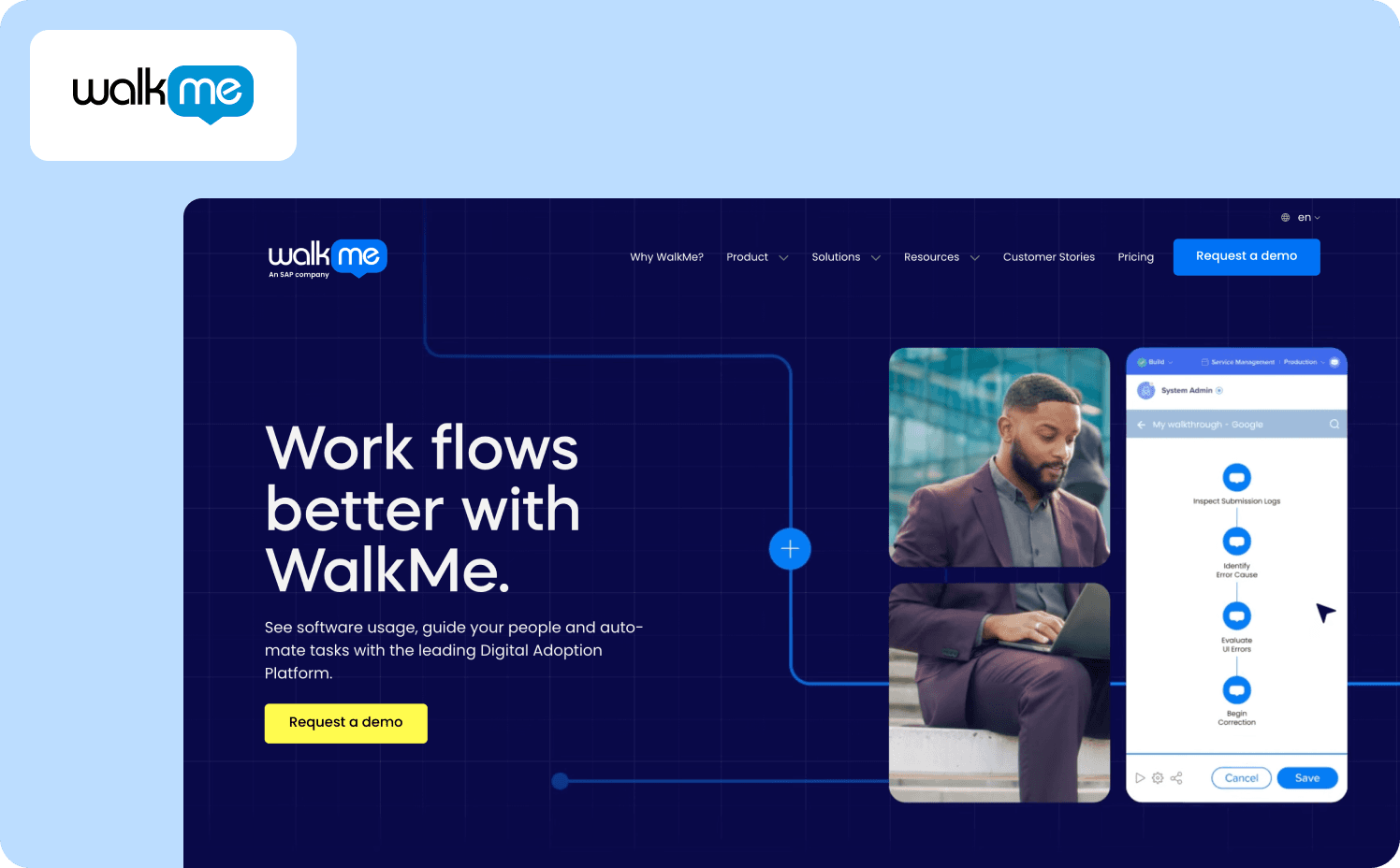
WalkMe is an enterprise DAP built for large organizations managing internal software adoption and employee training. Unlike customer-facing onboarding tools, WalkMe specializes in guiding employees through complex workflows spanning multiple enterprise systems.
Consolidates five core tools:
✅ Tour builder
✅ Analytics platform
✅ Survey tool
✅ Help center
✅ AI assistant
Strengths:
Cross-application orchestration: Onboarding users across third-party tools is easier as the platform guides employees through workflows that span multiple enterprise systems.
Workflow automation: ActionBot and Smart Walk-Thrus automatically execute routine steps like form filling and data entry.
Limitations: WalkMe is optimized for internal employee training rather than customer-facing product onboarding. Lack of transparent pricing and enterprise architecture can create substantial overhead.
Pricing:
WalkMe for employees: Custom
WalkMe for customer: Custom
5. Whatfix — Best for enterprises needing cross-application guidance at scale
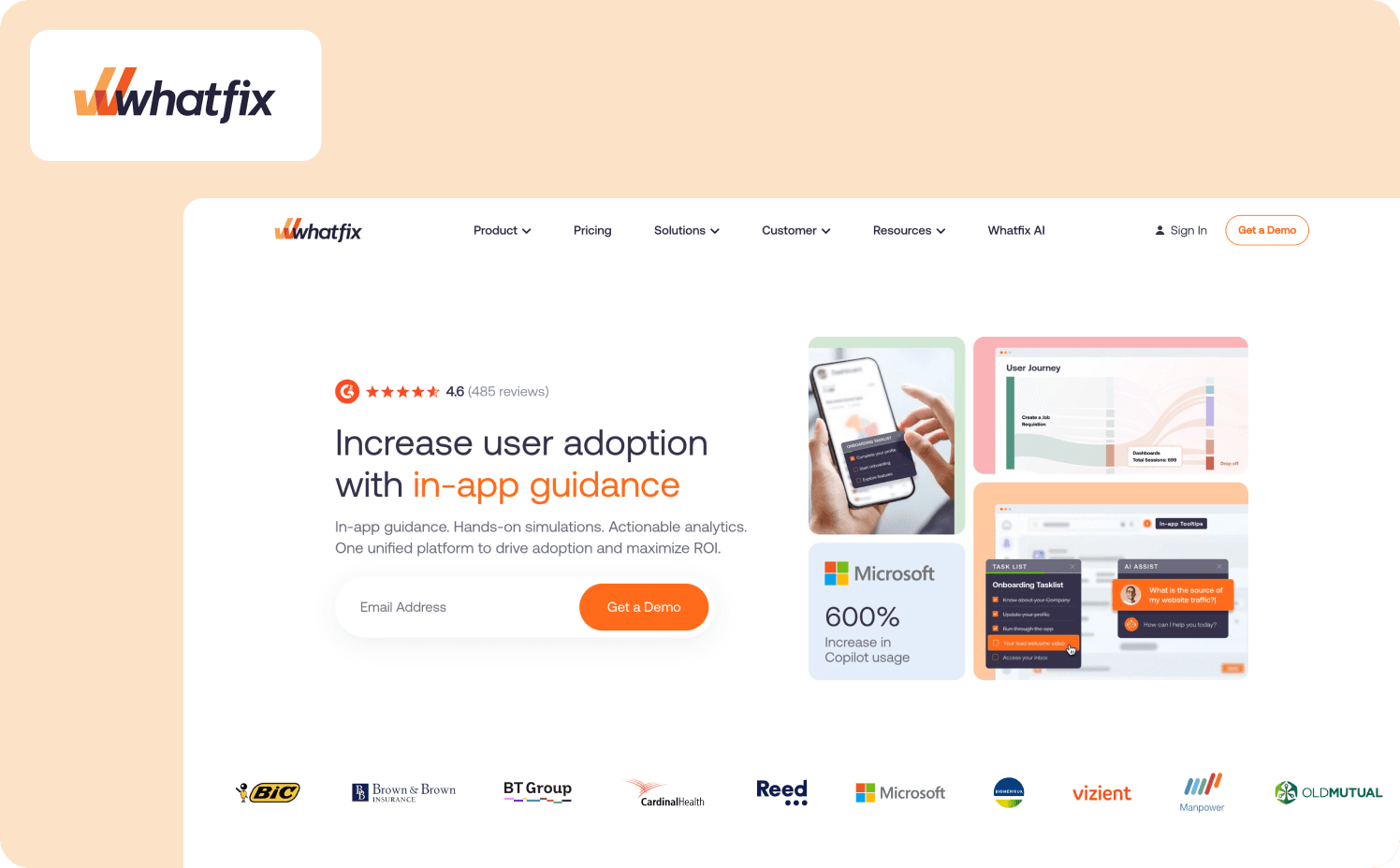
Whatfix is an enterprise DAP built for large organizations managing complex software ecosystems across multiple applications. The platform offers three integrated product lines: a DAP for in-app guidance, Product Analytics for no-code event tracking, and Mirror for simulation-based training.
Consolidates five core tools:
✅ Tour builder
✅ Analytics platform
✅ Survey tool
✅ Help center
✅ AI assistant
Strengths:
No-code editor: Product and training teams independently create flows, tooltips, and checklists with a no-code interface.
Unified analytics + action platform: Identifies friction points in Product Analytics, then teams can build targeted interventions in the DAP.
Limitations: Whatfix’s enterprise focus creates substantial barriers for smaller organizations. Pricing is entirely opaque with no public rates. The platform is limited to in-app overlays rather than standalone training videos.
Pricing:
Standard: Custom
Premium: Custom
Enterprise: Custom
Note: Product Analytics and Mirror are priced separately.
6. Stonly — Best for customer service teams reducing support volume with interactive knowledge
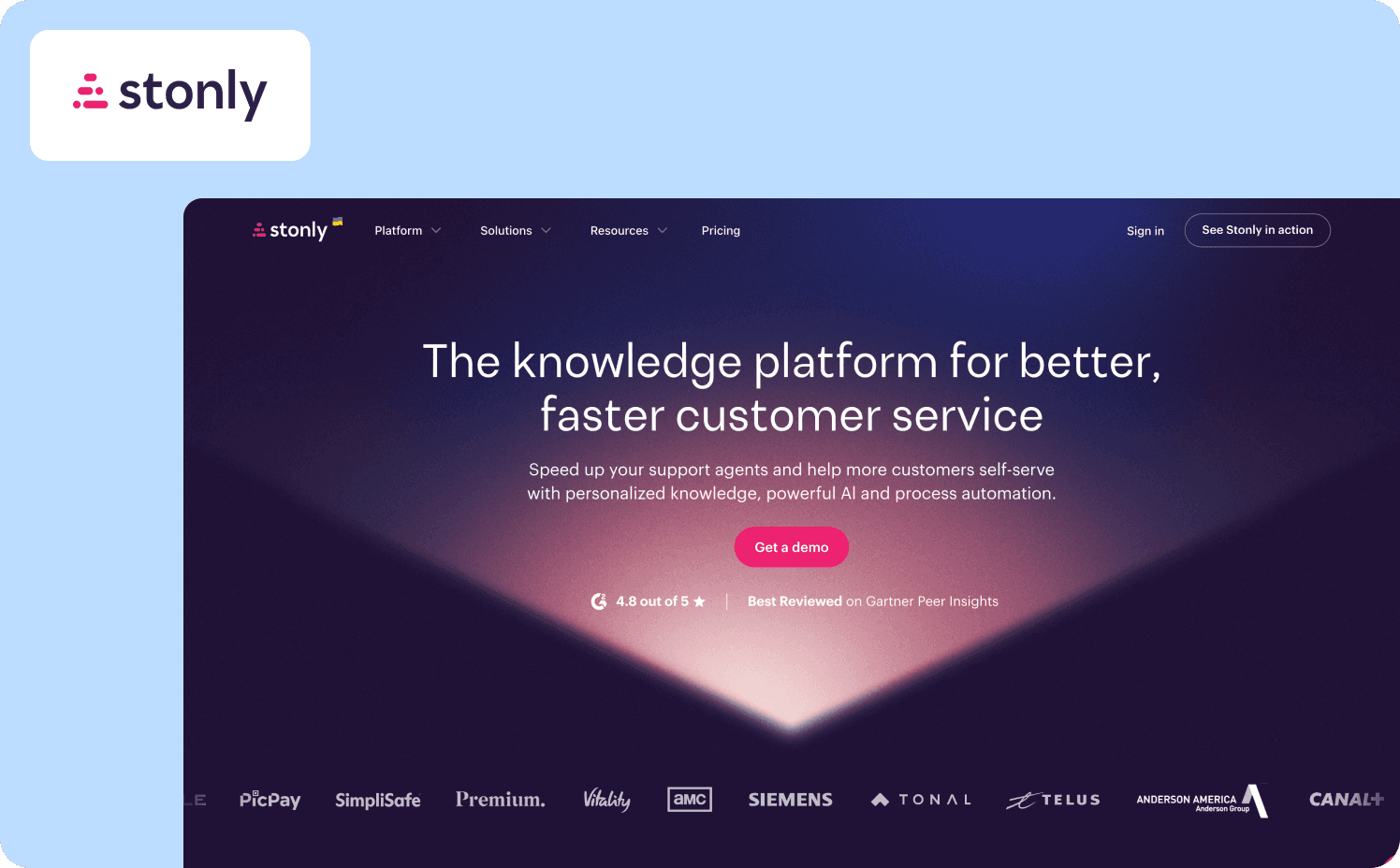
Stonly is an interactive knowledge management platform designed for customer service teams. Stonly is built for customer engagement teams reducing support volume through self-service onboarding resources.
Consolidates five core tools:
✅ Tour builder
✅ Analytics platform
✅ Survey tool
✅ Help center
✅ AI assistant
Strengths:
Interactive decision trees: Branching guides adapt to user choices, leading them to exact answers rather than forcing linear walkthroughs.
Embeds anywhere users need help: Deploy guides in websites, apps, Zendesk, Salesforce.
Limitations: Customization is limited and guides can end up looking extremely similar. It also has fewer integrations than competing platforms and no transparent pricing.
Pricing:
Small Business: Custom (For companies with less than 100 employees)
Enterprise: Custom
7. Gainsight PX — Best for enterprises linking product usage to customer success metrics
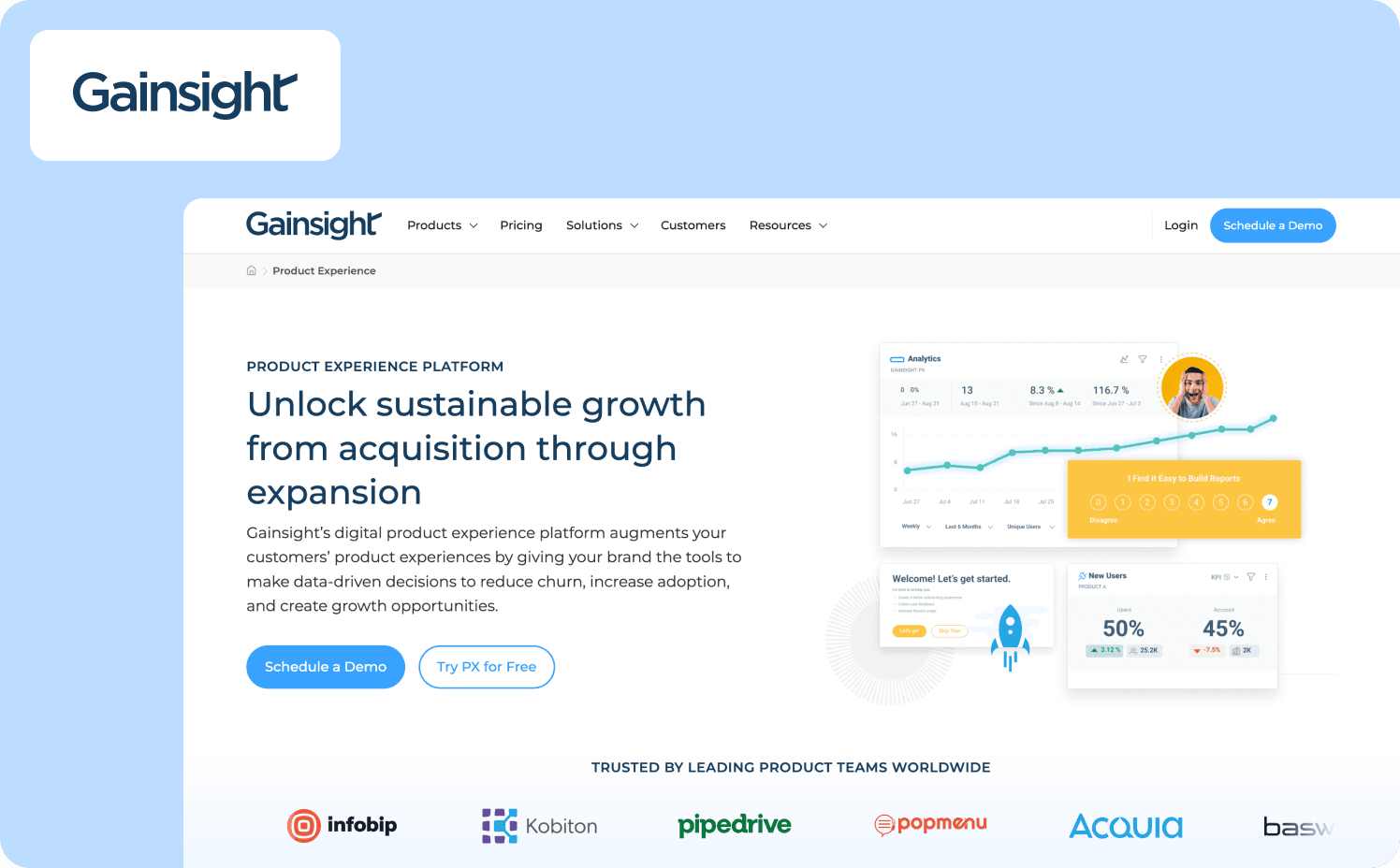
Gainsight PX is a product experience platform that unifies deep product analytics with in-app engagement tools. Designed to work standalone or integrate with Gainsight’s customer success platform, PX serves product teams at enterprises focused on aligning product adoption with account expansion and churn prevention.
Replaces five core tools:
✅ Tour builder
✅ Analytics platform
✅ Survey tool
✅ Help center
✅ AI assistant
Strengths:
Customer success alignment: Ties feature usage to account health scores, LTV, and expansion opportunities.
Powerful segmentation: Best-in-class targeting by behavior, demographics, and custom attributes.
Limitations: Gainsight PX’s enterprise complexity creates barriers for agile teams. Guide capabilities feel rigid and limited compared to platforms built specifically for digital adoption and the platform lacks transparent pricing.
Pricing:
No published pricing
8. Appcues — Best for no-code onboarding across web, mobile, and email
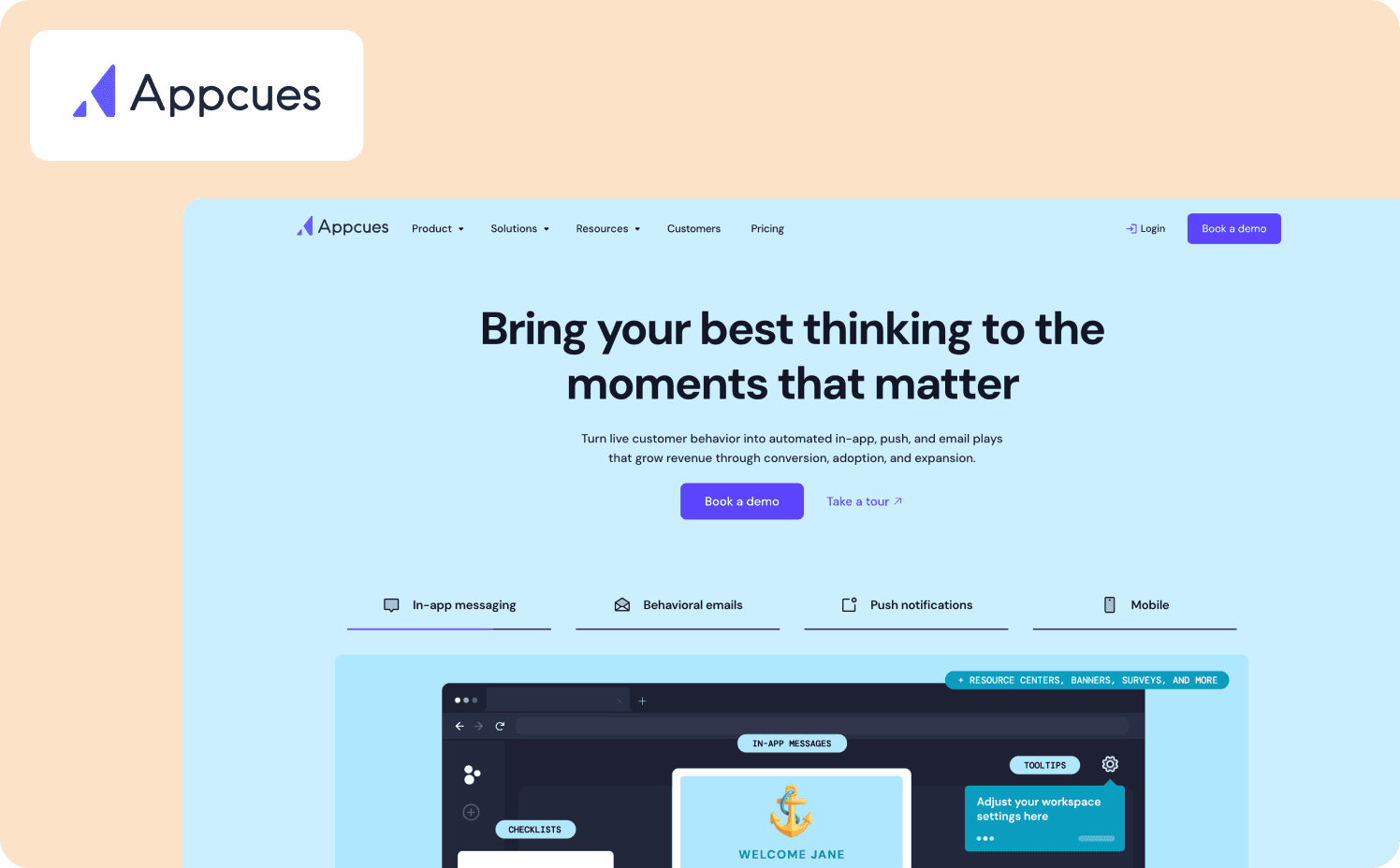
Appcues is a no-code product adoption platform that enables teams to create personalized in-app experiences, behavioral emails, and push notifications without engineering resources. The platform consolidates multiple features into a unified builder accessible to product, marketing, and customer success teams.
Consolidates four core tools:
✅ Tour builder
⚠️ Analytics platform
✅ Survey tool
✅ Help center
✅ AI assistant
Strengths:
Multi-channel workflow automation: Appcues connects in-app flows, behavioral emails, and mobile push notifications in automated sequences triggered by user actions, eliminating the need for separate messaging tools.
Drag-and-drop builder with zero code: The Chrome extension provides an intuitive interface for non-technical staff to build modals, tooltips, checklists, and surveys without developer involvement.
Limitations: Appcues’ analytics capabilities are limited to basic flow performance metrics rather than comprehensive product analytics, and essential features like premium integrations and advanced targeting are locked behind higher-priced tiers.
Pricing:
Grow: $750/mo for 1,000 MAUs
Enterprise: Custom pricing
9. Chameleon — Best for teams who need pixel-perfect brand matching
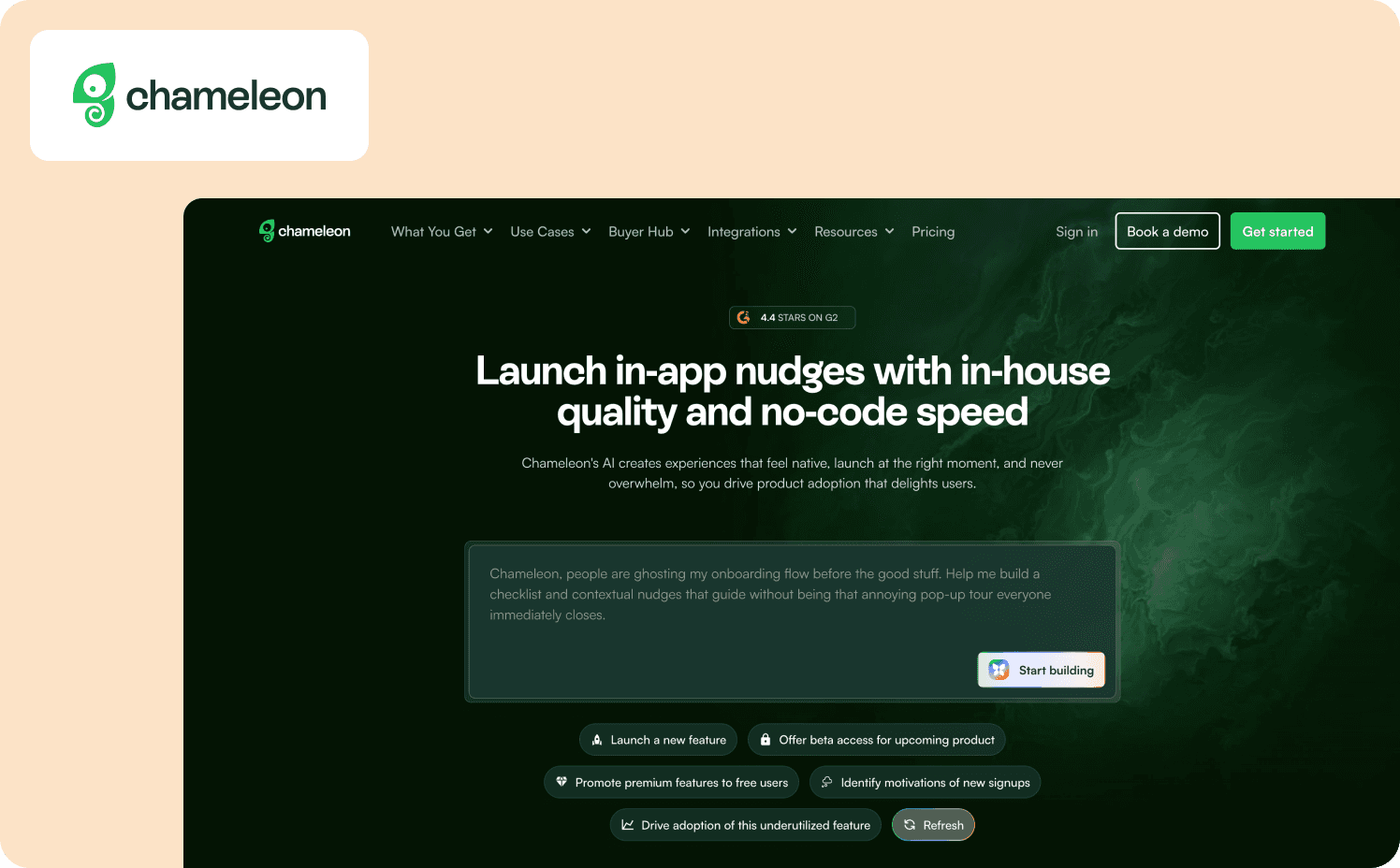
Chameleon specializes in highly customized in-app experiences with deep design control and advanced user segmentation. The platform is built for product-led SaaS companies that prioritize user experience and want onboarding that feels native to their product.
Consolidates four core tools:
✅ Tour builder
⚠️ Analytics platform
✅ Survey tool
✅ Help center
✅ AI assistant
Strengths:
Custom CSS: Match specific design systems using custom stylesheets and account-wide rules.
Interactive demos: Teams can embed working feature demos on their homepage, in marketing emails, and help modals.
Limitations: Achieving Chameleon’s deep customization typically requires CSS knowledge and the platform lacks native mobile SDKs for iOS and Android.
Pricing:
Free: Unlimited product-connected interactive demos
Startup: From $279/mo (1,000 MAUs)
Growth: From $15,000/year (1,000 MAUs)
Enterprise: Custom
10. Userflow — Best for startups prioritizing speed and visual customization
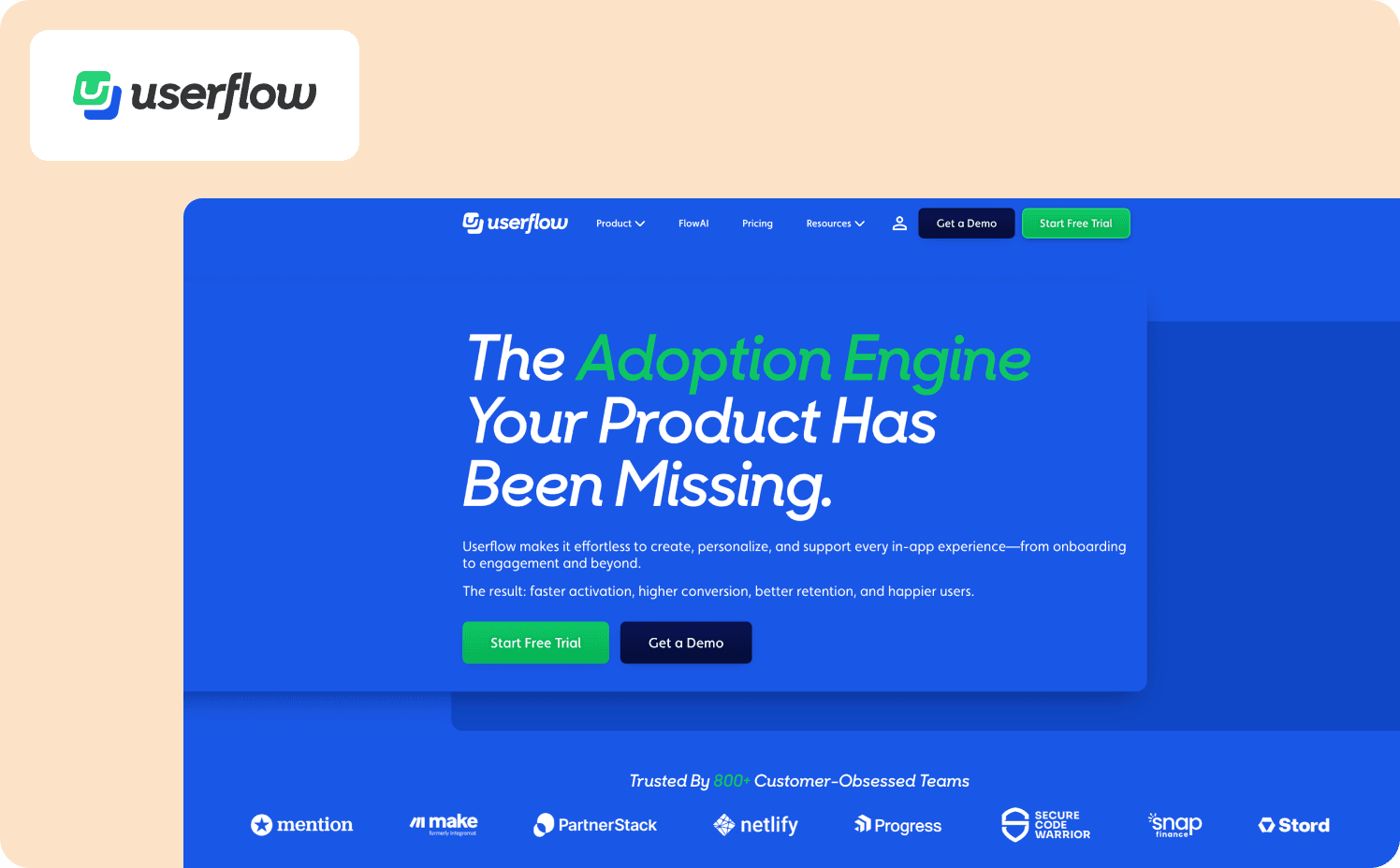
Userflow is a no-code onboarding platform built for fast deployment, offering a kanban-style flow builder, AI-powered optimization tools, and visual customization. The platform targets SaaS startups that need to launch onboarding quickly without developer resources.
Consolidates four core tools:
✅ Tour builder
⚠️ Analytics platform
✅ Survey tool
✅ Help center
✅ AI assistant
Strengths:
FlowAI identifies optimization opportunities automatically: The AI layer analyzes user behavior to surface where new users struggle, what’s working, and where to focus next — without manual funnel analysis.
Real-time collaboration prevents staging conflicts: Multi-environment support lets teams test flows in staging before pushing to production, with version control to restore previous iterations of onboarding tasks.
Limitations: Userflow’s analytics are limited to basic flow-completion metrics visible only within individual flow settings, rather than consolidated dashboards that show cross-flow patterns.
Pricing:
Startup: From $240/mo (3,000 MAUs)
Pro: From $680/mo (10,000 MAUs).
Enterprise: Custom
11. UserGuiding — Best for SMBs wanting comprehensive features and budget-friendly pricing
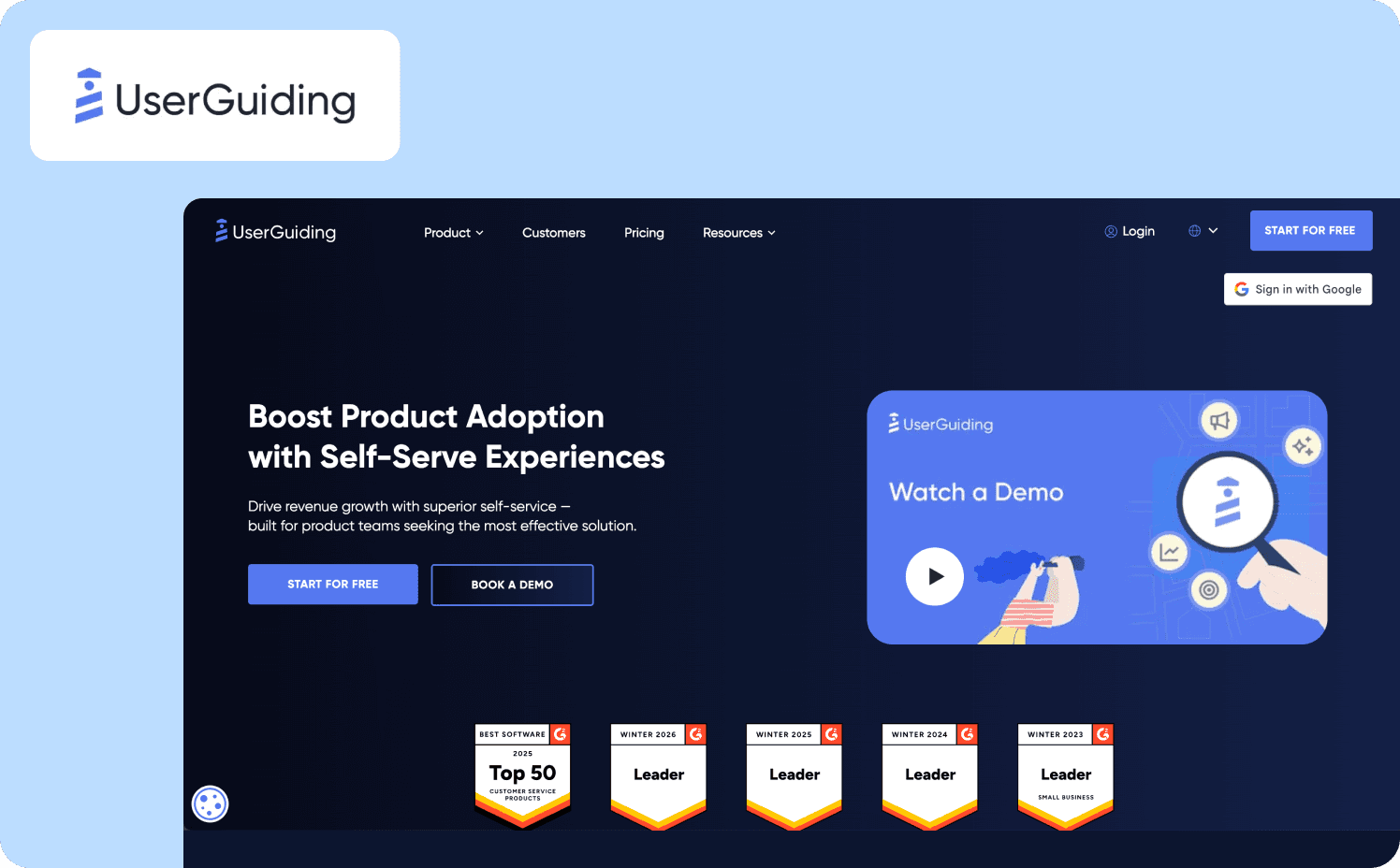
UserGuiding is a no-code product adoption platform built for fast-growing teams. The platform targets startups and SMBs that need complete onboarding capabilities without enterprise complexity or pricing.
Consolidates four core tools:
✅ Tour builder
⚠️ Analytics platform
✅ Survey tool
✅ Help center
✅ AI assistant
Strengths:
Multi-language capabilities serve international users: Support for multiple languages enables global rollouts without recreating content for each market.
Transparent pricing scales predictably: MAU calculator on pricing page eliminates budget uncertainty.
Limitations: UserGuiding’s analytics dashboard only tracks elements created within the platform, lacking deep cohort analysis or comprehensive funnel tracking. Lower tiers have feature caps limiting Starter to 25 active guides and two checklists.
Pricing:
Free
Starter: From $249/mo (2,000 MAUs)
Growth: From $499/mo (5,000 MAUs)
Enterprise: Custom
12. Inline Manual — Best for global teams needing multilingual precision
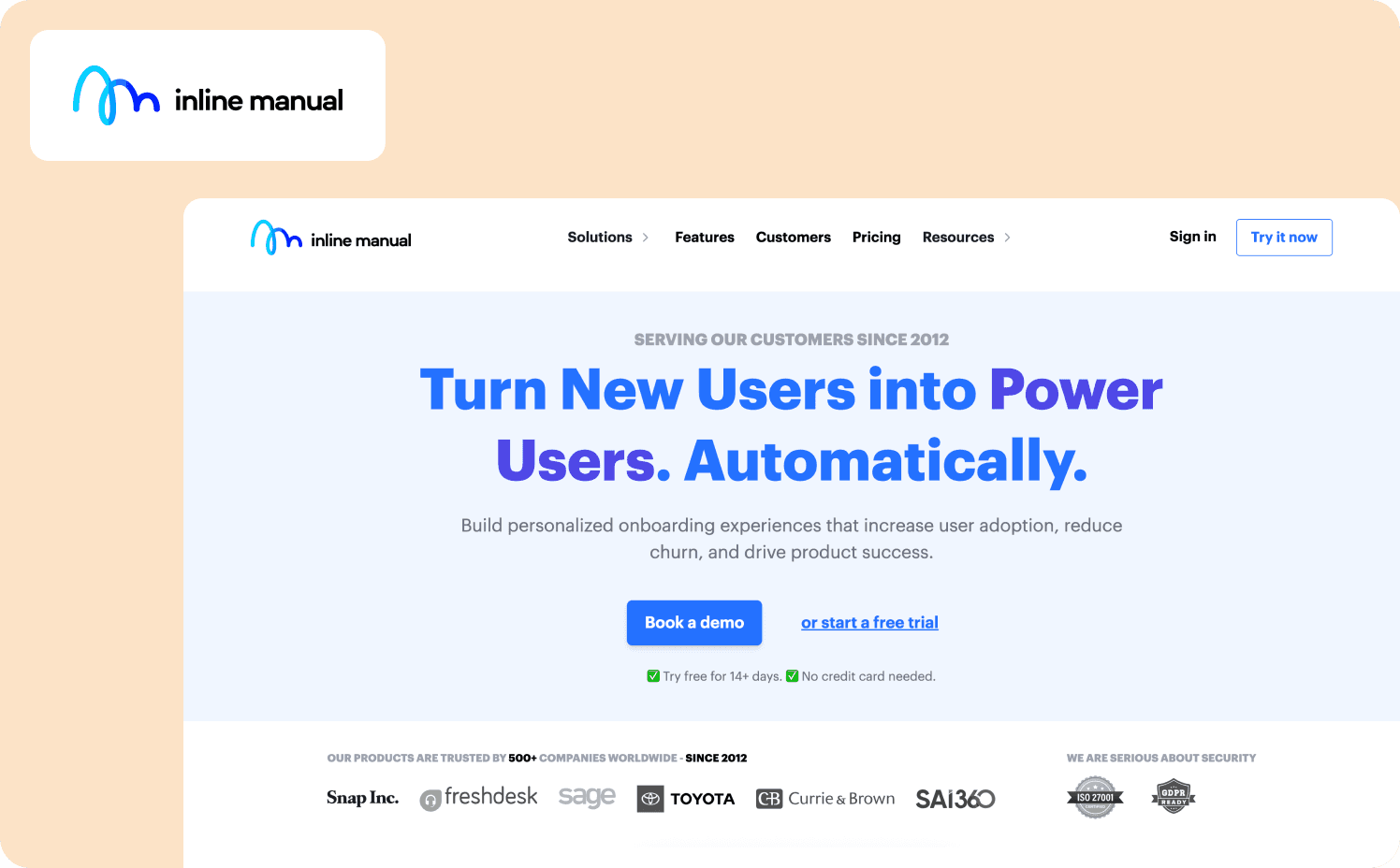
Inline Manual is a DAP focused on precise, role-based user guidance, offering interactive walkthroughs, tooltips, and in-app documentation. The platform emphasizes segmentation by role, behavior, and custom properties alongside version control for safe deployments.
Consolidates four core tools:
✅ Tour builder
⚠️ Analytics platform
✅ Survey tool
✅ Help center
✅ AI assistant
Strengths:
Role-based targeting segments experiences precisely: Serves different content to users based on their role, tenure, or behavior.
Version control prevents production errors: Tests changes on staging environments and rollback if new versions underperform.
Limitations: Inline Manual’s interface can feel outdated and unintuitive compared to modern competitors. Despite “no-code” positioning, the platform requires technical expertise for certain customizations.
Pricing:
Standard Pro: Starts at $158/mo (250 MAUs)
Enterprise: Custom
13. Product Fruits — Best for AI-powered tour automation with conversational support
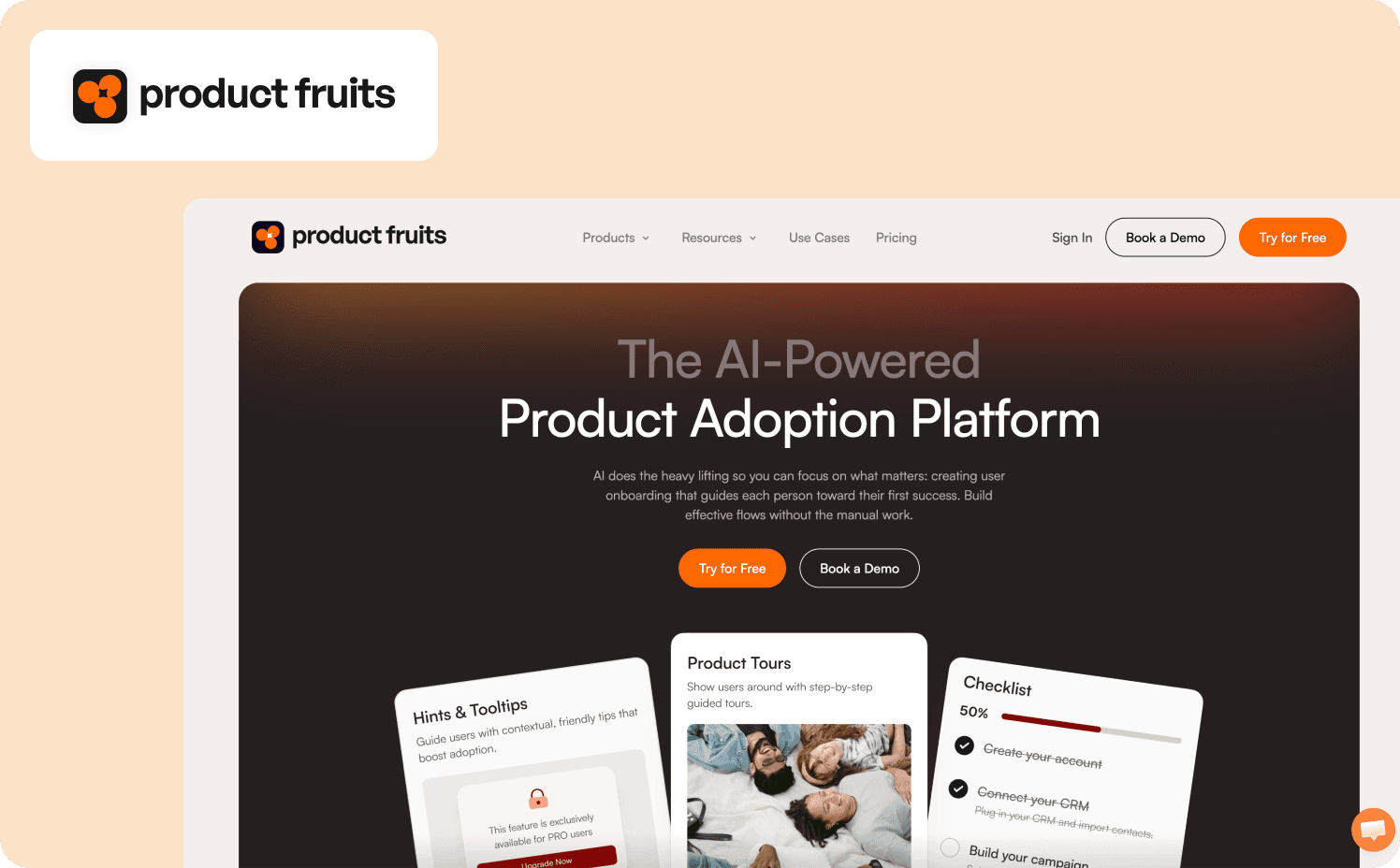
Product Fruits is an AI-powered product adoption platform featuring Elvin AI, which automatically generates contextual onboarding tours from a single product annotation and provides conversational support directly in-app.
Consolidates four core tools:
✅ Tour builder
⚠️ Analytics platform
✅ Survey tool
✅ Help center
✅ AI assistant
Strengths:
Conversational AI: Elvin copilot answers common queries before they hit support.
Fast setup: Teams launch live onboarding quickly with the no-code editor and unlimited seats/domains.
Limitations: Product Fruits features meet basic needs but lack the depth required for complex scenarios. The basic plan caps teams at 15 guides and two onboarding checklists, forcing upgrades as you scale. It also locks advanced features behind Pro/Business tiers.
Pricing:
Starter: $149/mo (1,500 MAUs)
Pro: $249/mo (1,500 MAUs)
Business: $499/mo (1,500 MAUs)
Why Jimo leads this list
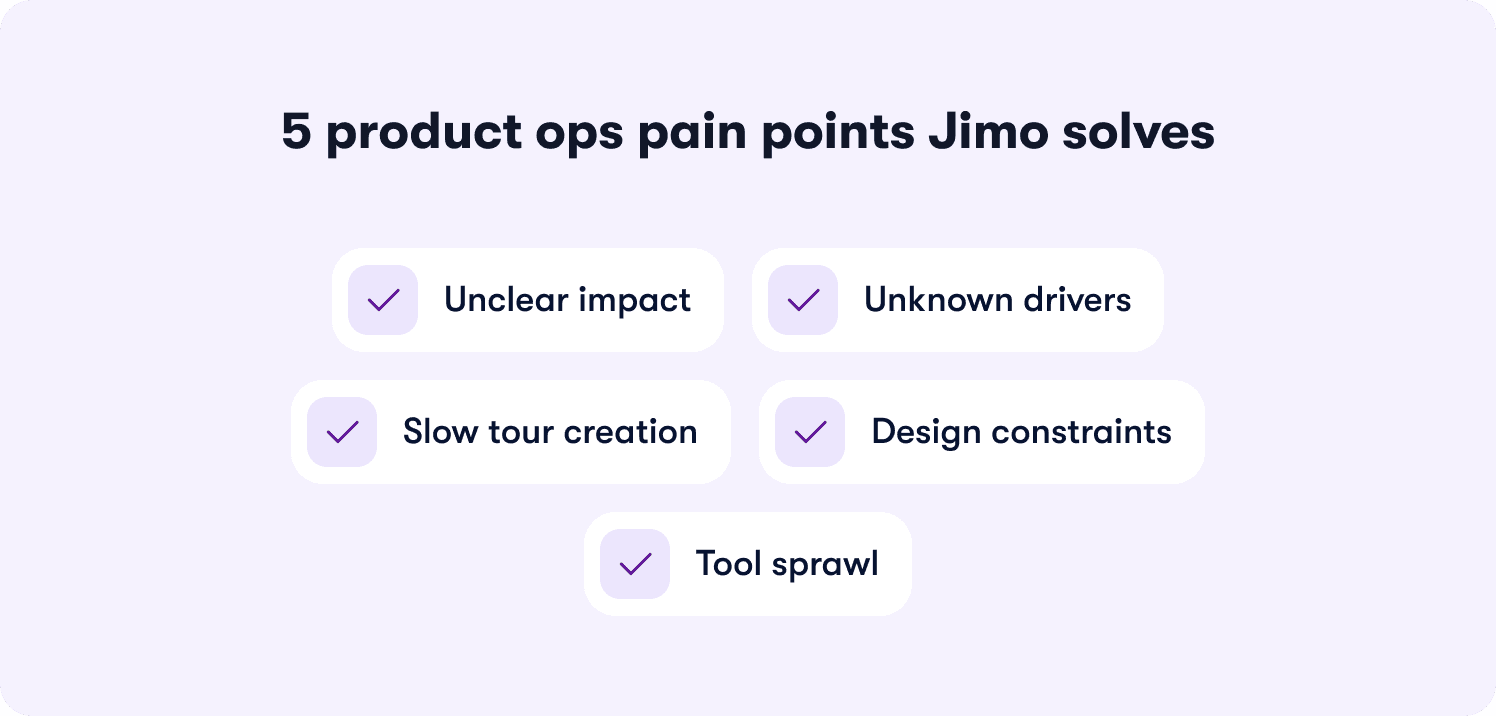
Jimo earns the top position because it directly solves the five pain points that drive product ops teams to this article.
When you can’t prove feature impact, Jimo’s Success Tracker lets you define custom activation events through a visual interface, connecting walkthrough interactions directly to retention and expansion revenue without engineering sprints. Click any element in your product to track it—no JavaScript, no developer tickets, no waiting.
When you can’t identify which user actions lead to conversion, Jimo’s gaming-inspired cursor mechanics and interactive engagement patterns achieve up to 40% higher completion rates than traditional linear tour tools. Action-based tours with animated cursor guidance, visual highlights, and progress indicators borrowed from game design teach users by doing, not by clicking Next. Users learn workflows through interactive participation rather than passive instruction, driving genuine skill development instead of checklist completion.
When building tours takes hours of PM time, Jimo is the only platform where AI automatically generates complete tours from a single recorded flow. Record your walkthrough once, and Jimo’s AI builds the entire tour structure, steps, triggers, and progression logic in 30 seconds. This cuts tour creation time by 90% compared to manually configuring steps in Appcues or Userpilot.
When matching brand guidelines requires developer resources, Jimo’s Figma-like visual editor lets PMs drag, resize, style, and position any element with full creative control and zero code. Appcues locks you into rigid templates, Chameleon requires CSS expertise for sophisticated styling, and Pendo’s builder needs engineering support for custom layouts. Jimo’s editor works like Figma: pixel-perfect design freedom without technical dependencies.
When overlapping subscriptions for tours, analytics, surveys, help content, and changelogs create operational burden, Jimo’s integrated suite consolidates five tools into one platform. Customers report 20x more users reached while eliminating the license sprawl and integration headaches that inflate total cost of ownership. For product operations juggling too many tools, Jimo delivers consolidation without compromise.
The right onboarding tool for your team starts here
The best onboarding platform isn’t the one with the longest feature list. It’s the one that matches how your team actually operates today. You’re not shopping for aspirational capabilities you might need later. You’re looking for the specific solution that solves your specific problem without creating new dependencies, maintenance burden, or integration headaches.
If you’re struggling to connect guidance to expansion signals because you’re managing separate subscriptions for tours, analytics, surveys, self-service, and AI flows, Jimo consolidates your entire stack into one platform that teams deploy in minutes and start using immediately.
If you need deep analytics but can justify enterprise pricing, Pendo or Gainsight PX connect product usage to business metrics with session replay and customer health scores.
If mobile is your primary platform, Appcues provides native iOS and Android SDKs with cross-channel messaging.
If design consistency matters more than speed, Chameleon’s custom CSS styling delivers pixel-perfect brand matching.
If you need multilingual support for global teams, Inline Manual handles all languages including right-to-left scripts without duplicating content.
But if you’re drowning in subscriptions, fighting integration failures, and watching operational costs compound while activation rates stagnate, then book a demo with Jimo and see how consolidation drives results.
FAQs
What is a product onboarding tool example?
Product onboarding solutions like Jimo, Pendo, and Userpilot help SaaS companies guide new users through product workflows using in-app messages, product tours, and interactive checklists. These user onboarding tools act as product analytics tools throughout the entire onboarding process. They deploy directly inside your application to improve onboarding without requiring engineering resources.
Are there free product onboarding tools?
Yes — Pendo offers a free tier for 500 MAUs, and UserGuiding provides a forever-free plan. However, free onboarding tools typically lack advanced capabilities like automated workflows, the ability to segment customers, and comprehensive event tracking that paid plans include.
How does product onboarding software differ from employee onboarding tools?
Product onboarding software focuses on helping new users adopt SaaS applications through user onboarding processes like product tours and contextual help, while employee onboarding tools manage HR workflows like paperwork and training schedules. Platforms like WalkMe and Whatfix serve both markets, but customer onboarding tools prioritize feature adoption and product usage over compliance training.
What is SaaS onboarding software?
SaaS onboarding tools are cloud-based platforms that help SaaS businesses accelerate user onboarding through in-app guidance, user behavior tracking, and personalized onboarding experiences. The best onboarding tools combine product tours, the ability to gather feedback, and actionable insights to reduce customer time to value and drive product adoption.
How do I justify replacing our current onboarding tool?
Calculate total cost across your existing tools: if you’re paying separate subscriptions for tours, analytics, surveys, and help content, platforms offering complete consolidation like Jimo ($449/mo replacing five tools) deliver immediate ROI. Consolidation lets product teams identify which behaviors correlate with retention and upgrades, turning onboarding from a UX task into a revenue lever.
What breaks when you switch product onboarding systems?
Event tracking configurations, user segmentation rules, and automated workflows don’t transfer between platforms, so expect a few weeks to rebuild targeting logic and onboarding flows. Historical analytics data remains in your old system, third-party tools integrations require reconfiguration, and your support team needs retraining on the new interface for handling support tickets and customer feedback.